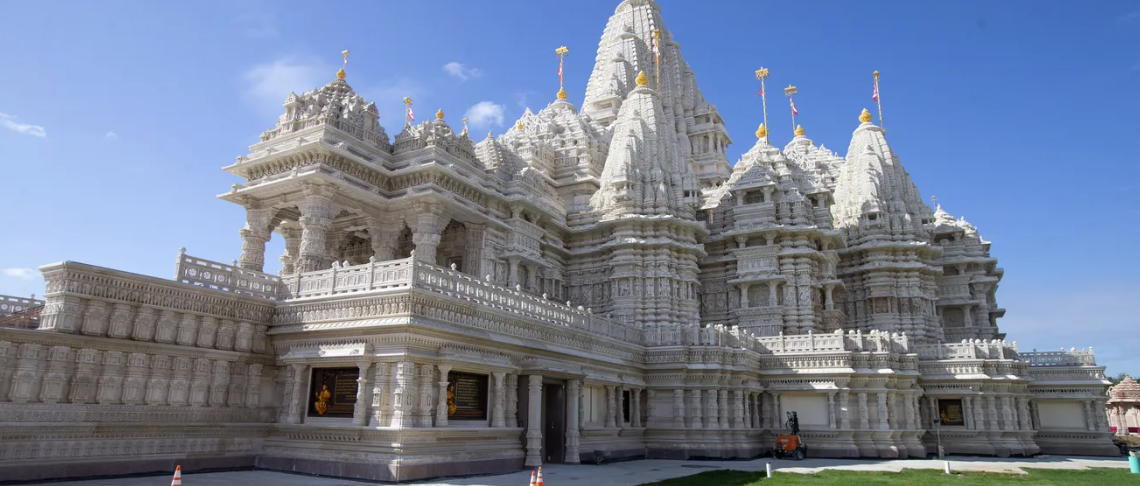
A Hindu Village in Africa: Discovering Devotion in Ghana
A Hindu Village in Africa: Discovering Devotion in Ghana
When people think of Hinduism outside India, they often imagine Indian families who migrated abroad, built temples, and continued their traditions in a new country. That story is common in many parts of the world. But in Ghana, West Africa, there is something much more rare and beautiful: local African people who have embraced Hinduism with deep faith, devotion, and sincerity.
This journey takes us to the Hindu Monastery of Africa in Ghana, a peaceful spiritual place where local devotees gather for worship, prayer, bhajan, kirtan, and community. It is not simply a temple where people visit and leave. It is a monastery where monks have lived, practiced yoga, followed daily spiritual discipline, and maintained Hindu traditions with love.
Ghana is a country where most people follow Christianity, followed by Islam, while a smaller percentage follow other religions, including Hinduism and Buddhism. Within this small Hindu community, the Hindu Monastery of Africa holds a very special place.
How Hinduism Reached Ghana
The roots of Hinduism in Ghana go back to the mid-20th century, when Indian traders and business families came to Ghana for work. Many were involved in textiles, electronics, import-export, and other businesses. Even while living far from India, they continued their worship, festivals, and reading of sacred texts such as the Bhagavad Gita.
Over time, local Ghanaians became curious about these teachings. Many were touched by the message of the Gita, the idea of nonviolence, and the belief that God can be worshiped in many forms. Hinduism’s spiritual depth, openness, and emphasis on peace inspired many people.
One of the most important figures in this history was Swami Ghananand Saraswati, known as the first African Hindu monk in West Africa. Before becoming a monk, he studied Hinduism deeply, traveled to India, met Hindu saints, and was later initiated into the tradition. His life and work helped build the foundation for Hindu practice among local Ghanaian devotees.
Even after his passing, his followers continue the path he helped establish.
Visiting a Local Hindu Family
One of the most touching parts of this journey is the visit to a local Ghanaian Hindu family. Their names themselves reflect their devotion: Shiva, Vishnu, Radha, Ganesh, Bharat, and others. When they greet each other, they say “Hari Om” and “Namaste,” just as devotees do in many Hindu communities around the world.
Their home is filled with devotion. Inside, there are pictures and murtis of Lord Shiva, Mata Parvati, Durga Mata, Hanuman Ji, Shri Ram, Ganesh Ji, Lakshmi Mata, and other deities. The family worships with sincerity and love, and their home feels like a small temple.
Outside the house, they keep Tulsi, flowers, coconut, guava, plantain, and other plants that are used in worship and prasadam. Tulsi worship is especially important, as Tulsi is considered sacred in Hindu tradition and is often offered to Krishna and used in prasadam.
The family also offers prasadam to guests with great respect. This shows that Hindu culture is not only about rituals, but also hospitality, love, humility, and sharing blessings with others.
The Beauty of Devotion Beyond Borders
What makes this experience powerful is not just that Ghanaian people are practicing Hinduism. It is the depth of their feeling. Their devotion does not look borrowed or superficial. It has become part of their daily life, their names, their homes, their food, their prayers, and their relationships.
One family member sings a bhajan for Durga Mata, showing how naturally Hindu worship has entered their lives. Children are named after Hindu deities. Families gather around prayer spaces. Guests are welcomed with warmth and prasadam. The atmosphere is simple, sincere, and deeply spiritual.
It reminds us that Sanatana Dharma is not limited by geography, race, language, or nationality. Devotion can grow anywhere when the heart is open.
The Hindu Monastery of Africa
After visiting the family, the journey returns to the Hindu Monastery of Africa. The temple grounds are peaceful and filled with symbols of Hindu culture. There is a statue of Mahatma Gandhi, representing the principle of ahimsa, or nonviolence, which deeply influenced many local devotees.
There are also statues connected to Swami Ghananand Saraswati and his guru, Swami Krishnanand Saraswati. These figures represent the spiritual lineage that helped establish Hindu practice in Ghana.
The temple includes areas for worship, meditation, and community gathering. Tulsi plants, bells, flowers, trees, and shrines create an atmosphere that feels deeply connected to Hindu tradition. Even though the temple is located in the middle of the city, entering the space brings a sense of calm and purity.
People of all religions are welcome. Anyone can come, sit, pray, observe, and experience the peaceful environment.
Evening Prayer and Aarti
As evening arrives, the prayer begins. Bells ring, devotees gather, and the sound of familiar Hindu prayers fills the temple. The devotees sing “Om Jai Jagdish Hare,” chant mantras, offer prayers, and participate in aarti.
Inside the main temple, the atmosphere becomes powerful and devotional. The prayers include Sanskrit mantras, names of Lord Narayan, Lord Shiva, and other sacred invocations. Even far away from India, the feeling is unmistakably Hindu.
This is the most beautiful part of the journey: seeing that the same prayers sung in Indian homes and temples are also being sung with devotion in Ghana by African Hindu devotees.
A Living Example of Sanatana Dharma
The Hindu community in Ghana shows that Sanatana Dharma is truly universal. It does not belong to only one country or one ethnicity. It belongs to anyone who sincerely seeks truth, peace, devotion, and connection with God.
The Ghanaian Hindu devotees have not simply copied Indian culture. They have embraced the teachings with their own heart and made them part of their own lives. Their devotion is sincere, their hospitality is genuine, and their spiritual discipline is inspiring.
This journey teaches us that Hinduism can take root anywhere. Like a seed planted in new soil, it can grow into a tree of devotion when watered with faith, service, and love.
The Hindu Monastery of Africa is more than a temple. It is proof that devotion has no borders.
Hari Om.


